1st Workshop of the IAG Working Group on Urban Geomorphology (Kraków, Poland – 12-15 May 2025)

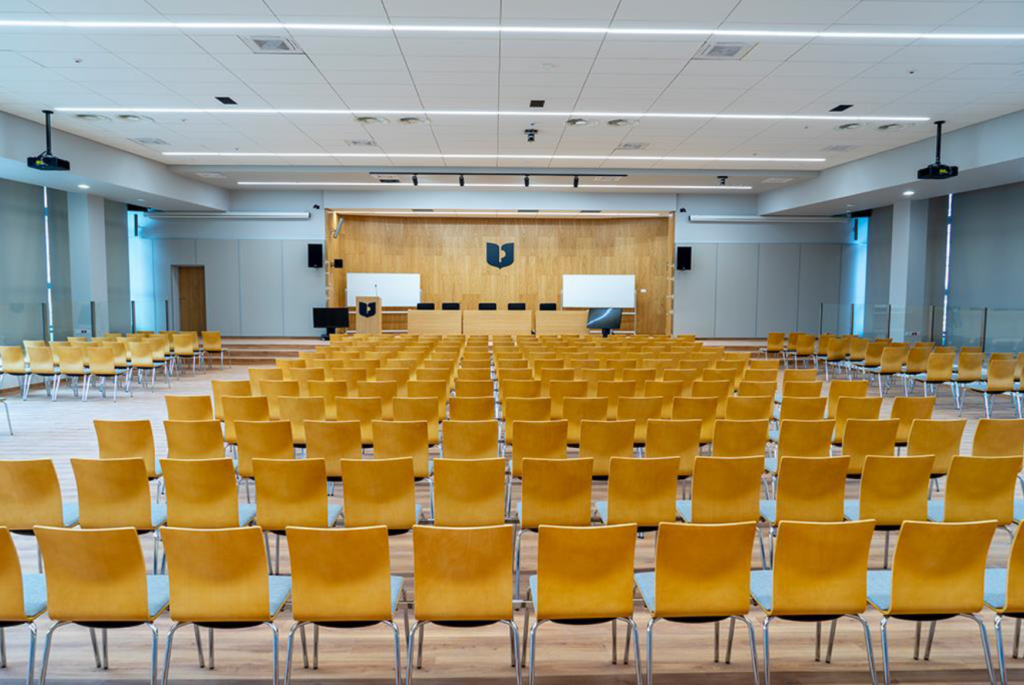
The venue of the workshop, at the University of the National Education Commission (Kraków, Poland)

The IAG Working Group on Urban Geomorphology organises its 1st Workshop! The overarching goal of that workshop is to bring together urban geomorphologists worldwide, which will lead to a better understanding of overall matters in ancient and modern urban geomorphology, and will help to build future collaborations.
The workshop will be held in Kraków (Poland), on 12-15 May 2025, with the general theme “Geomorphology, geodiversity and geosites in urban areas“. The programme includes plenary lectures, oral & poster sessions, training on a GIS software (dedicated to early-career researchers), as well as two field trips.

The deadline to submit abstracts is 28 February 2025. Find the third circular of the event here, and the link for early-bird registration here.

The IAG will support the participation of two young Geomorphologists via two grants – more information soon!

Reports by IAG Grant Holders – IAG Working Group DENUCHANGE Workshop (Rome, Italy, 23-26 September 2024)

Photo from the post-conference field trip (credits: Nevena Antić)

The IAG DENUCHANGE Working Group organised the 4th IAG DENUCHANGE Workshop at the Sapienza University in Rome (Italy) on 23-26 September 2024. The IAG offered two Grants of 450€ each to help two Young Geomorphologists to attend this event. Congratulations to the two Grant Holders!

Grant Holders participated in two days of oral and poster presentations, including one dedicated to young Geomorphologists. They report “interesting” and “incredibly inspiring” talks during the scientific sessions. They also had the opportunity to follow a “wonderful” geo-touristic walking tour of Rome, which notably showed them geomorphological landforms and their connections to Rome’s historical past. One of the two participated to a post-conference field trip to Val d’Orcia (Southern Tuscany), which gave him the opportunity to see in person an important study site in his research field. Overall, both Grant Holders are happy to have participated to this event, which allowed them to “connect” with other people from their research field, but also more generally to people from the DENUCHANGE Working Group.

Find their full reports here:

Publication of “Landscapes and Landforms of Costa Rica”

The most recent addition to the IAG-endorsed series is the “Landscapes and Landforms of Costa Rica” book, edited by Adolfo Quesada-Román. It comprises twenty-one chapters, including both country-wide overviews and more site-specific studies. Inevitably, volcanic geomorphology, mass movements and fluvial dynamics are prominently represented, but there are also chapters focused on karst and caves, glacial and periglacial landscapes, coastlines, soils, and human impact in geomorphology. The book is 455 pages long, and so contains a wealth of information.

Find details and purchase options here: https://link.springer.com/book/10.1007/978-3-031-64940-0

Obituary for Professor Denys Brunsden (1936-2024) – the First President of the International Association of Geomorphologists

On 25 January 2024 the global community of geomorphologists lost one of the biggest persons in the history of the discipline, Professor Denys Brunsden. Not only was he a brilliant, visionary scientist, always eager to explore new avenues of research and to challenge established views, but will be also remembered as one of the founding fathers of the International Association of Geomorphologists, its staunch promoter, supporter of young geomorphologists from everywhere on the planet (including the author of this note!), straight and most amiable man, both in a lecture room as well as in the field.

Denys Brunsden was born on 14 March 1936 in Devon, south-west England, attended a school in Torquay and then joined the Royal Air Force to do his National Service. Perhaps surprisingly, the military service influenced much of his further career in academia, as it is the army where he learnt the skills of air photo interpretation – a most useful tool in geomorphological research, especially at large scales of inquiry. In 1956 he was enrolled as a geography student at King’s College of the University of London and had an opportunity to learn from Professor S.W. Wooldridge, one of the most eminent British geomorphologists of that time and a keen follower of the denudation chronology concept. No wonder, therefore, that in the early years of Denys’ research career issues of long-term landscape evolution were also strongly represented and his doctoral thesis was focused on the denudation chronology of Dartmoor. He will be associated with the King’s College for his entire academic career, until retirement.

However, a visit to New Zealand in 1965 (a country that he always recommended to geomorphologists “to see before they die” – quotation from one of his position papers) opened his eyes to a different kind of geomorphology: much more dynamic, with major changes accomplished at short time scales, with the key role of tectonics, and so much relevant to the society. Back in England, he found a great research playground so close to his home, where he could develop ideas of dynamic, short time-response geomorphology, look at processes at work, and show that geomorphology matters. These were the cliffed coasts of East Devon and Dorset, with their abundance of landslides, mudflows, and ever-changing sandy and shingle beaches. Not only did he publish a series of original papers, but contributed many conceptual papers to journals and edited monographs and co-authored “Geomorphology and Time” (together with John Thornes) – a book highly stimulating intellectually, well ahead of the time. The 1970s were also the period when Denys became strongly involved in applied geomorphology, undertaking projects and consultancy work both in Britain and abroad, especially in the Middle East. In 1979 he (co-)established Geomorphological Services Ltd, the first geomorphological consultancy enterprise in the UK.

In the next decade, in addition to all activities pursued already, he embarked himself on a mission to establish a global scientific association that would unite geomorphologists of different origin and background. Working together with Professor Jess H. Walker and several other visionary geomorphologists, travelling extensively and persuading the sceptics, he saw the dream fulfilled in the late 1980s, first in Manchester in 1985, where the First International Conference on Geomorphology was held, and then in Frankfurt (Germany) in 1989, where the International Association of Geomorphologists was founded during the Second International Conference on Geomorphology. Not at all surprising was then the election of Denys Brunsden to become the first President of the IAG, a position that he held until the next international conference in 1993. In recognition of his outstanding service to the global geomorphological community Denys was awarded Honorary Fellowship of the IAG in 1997, whereas a special Brunsden Medal was established by the IAG to honour those particularly involved in organizational matters of the associaion, with the first awardee (Mauro Soldati) announced in 2013.

Towards the end of the 20th century another field of interest and activity became prominent in Denys’ life. Many years of investigating geomorphology of the Devon and Dorset Coast made him realizing that this coastal landscape, with significant geology underpinning dynamic geomorphology and outstanding scenery, is not only aesthetically pleasant (as long appreciated by thousands of visitors), but also important scientifically and this at the global scale. Thus, he became involved in a project aimed at the inscription of the Dorset and East Devon Coast on the World Heritage List, effected in 2001. Arguments for inscription under criterion (viii), emphasizing global significance of geology and geomorphology and arising from Denys’ research (among others), were particularly strong.

In 1996 he retired from King’s College, but remained active in the IAG, attending its conferences in person until 2013 (health issues prevented his travels in Delhi, 2017, and Coimbra, 2022, but online presence was arranged instead), and was involved in many regional and local initiatives and projects.

There is a long list of distinctions and awards that Denys received. Besides the Honorary Fellowship of the IAG, he was the recipient of Gill Award from the Royal Geographical Society (1977), David Linton Award of the British Geomorphological Research Group (1993), William Smith Medal from the Geological Society of London (2000). In 2003 he was appointed to the Order of the British Empire by Queen Elizabeth for his services to Geoconservation and Geomorphology. Denys was also a honorary fellow of Polish Association of Geomorphologists.

The 2020s were the years of deteriorating health, and the pandemics further limited contacts with other geomorphologists, which Denys enjoyed so much. For instance, it was impossible to organize an event, at which a research monograph “Landscapes and Landforms of England and Wales” (published in 2020) dedicated to him could have been presented. The ultimate departure of Denys Brunsden caused a great sorrow among geomorphologists worldwide, so many helped and advised by Denys at different occasions and stages of career. As mentioned in the obituary note published by the Geological Society, after the funeral ceremony in Chideock in Dorset where he lived, his ashes were scattered onto the coastal landslide of Stonebarrow, going now slowly seaward. It is also necessary to mention the strong support Denys enjoyed throughout his life from his wife Elizabeth.

The author of this note had the privilege of long personal acquaintance with Denys Brunsden, which began during his visit to Poland in 1993. Denys was very supportive during my first research stay in England in 1994, helped to establish contacts with other UK geomorphologists, introduced me to the world of the IAG and showed huge trust that I could become an effective secretary of the Association, which occurred in the term 1997–2001. I also had great fun visiting some of the Dorset landslides with Denys during a memorable field trip with Oxford students in 1996, and enjoyed a common visit to Taiwan in 2009. The last time I met Denys in person was hot summer of 2018, where we had a most pleasant lunch at the cottage of Professors Andrew Goudie and Heather Viles in the Isle of Portland.

No doubt that we lost a great personality.

Piotr Migoń


Find a reference list of Denys Brunsden’s research here.

IAG Rocky Coasts WG – International Rocky Coast Conference (Trieste, Italy, 25-26 June 2025)

The IAG Rocky Coasts Working Group organises the International Rocky Coast Conference (IRC2025), which will be held in Trieste (Italy) on 25-26 June 2025 – following a postponement from 2020 due to the Covid-19 pandemic. This meeting serves as a platform to discuss advances in the study of rock coasts and will include a range of presentations relevant to Rock Coast Geomorphology.

Find detailed information about the conference here: https://irc2025.units.it. Call for abstracts is open until 31 December 2024!


Almost 25 years ago a number of researchers from all over the world met in Brighton (UK) at the EUROPEAN ROCK COASTS 2001 CONFERENCE. This meeting was the first international symposium devoted to rock coasts geomorphology under the support of the EU-funded research project ESPED (European Shore Platform Erosion Dynamics). International links among
researchers from different countries and disciplines were established on collaborative research topics.

Since then, there has been a considerable range of research projects actively investigating erosion processes operating in rock coast environments. Gone are the times when papers about rocky coasts used the “neglected coastal feature” terminology, now the most relevant journals devoted to Geomorphology and Marine Ecology frequently publish papers on rock coast processes and landform evolution. It should be noted that during the last decade the rocky coasts community has increased significantly resulting in a consolidated Working Group at the International Association of Geomorphologists. A seminal book representing the discipline has since been published by the Geological Society of London: the “ROCK COAST GEOMORPHOLOGY: A GLOBAL
SYNTHESIS”. However, coastal protection agencies and engineering contractors charged with managing rock coasts require further data from the rock coast scientific community to improve the effectiveness of current and future coastal management practices.

Against this background, and following the post-Covid re-openings, the International Rocky Coast 2025 Conference in Trieste is aimed at providing rock coast researchers with a timely opportunity to take stock of what they have achieved to-date, and to identify future research needs and directions as well as foster collaborative partnership.

IAG Webinar for the International Geodiversity Day 2024

Established in 2021 by the 41st session of the UNESCO General Conference, the International Geodiversity Day occurs each October 6th and aims to raise public and policy awareness of the importance of non-living nature.

To celebrate the third edition of the International Geodiversity Day, the IAG organises a webinar entitled “Geomorphological Diversity of the 2nd 100 IUGS (International Union of Geological Sciences) Geological Heritage Sites.” It will be conducted on October 29th (Tue), 15:00-17:00 CET. You will listen to three speakers from Canada, Italy and Poland, who will illustrate the importance of the International Geodiversity Day with concrete examples.

Find the flyer here, and register on Google Forms here. If you have problems accessing the registration form, please e-mail oguchi<at>csis.u-tokyo.ac.jp. Find more information on the International Geodiversity Day here.

Reports by IAG Grant Holders – International Conference on Permafrost (Whitehorse, Canada, 16-20 June 2024)

On-site attendees listening to a presentation by Lukas Arenson, conference chair of the 12th ICOP, in the Kwanlin Dün Cultural centre (Whitehorse, Canada).

The International Permafrost Association (IPA) organised the 12th International Conference on Permafrost (ICOP) on 16-20 June 2024, in Whitehorse (Canada).

The IAG offered two Grants to help young geomorphologists to attend the conference – congratulations to all Grant Holders!

The theme of the 12th ICOP was “Integrating Perspectives of Permafrost Thaw, Change, and Adaptation“. Overall, both Grant Holders are “grateful for the financial support provided by the IAG”, which made their participation to the 12th ICOP possible. One of the Grant Holders, Roger, had the opportunity to be an invited speaker in a session on coastal permafrost. He also participated in a conference field trip, where they took geophysical measurements on a permafrost thaw slump – an in-person experience that has “no substitute” according to Roger. Melanie, the second Grant Holder, had her work published as a full conference paper. She highlights that the event offered her “invaluable” feedback on her research, and the opportunity to “explore new approaches, transfer knowledge […], reconnect with colleagues and exchange ideas”.

Find their full reports here:

IAG Video Contest – winner July-September 2024

The winner of the IAG Video Contest for the period July-September 2024 is Martin Mergili (Austria)! Find below his video and descriptive text.

If you want to participate in the contest, find the rules, guidelines and details on the procedure here.


The rapid recession of Gepatschferner

by Martin Mergili, Austria

Gepatschferner is located in the headwaters of Kaunertal in the province of Tyrol, Austria. It represents one of Austria’s two largest glaciers, with almost the same surface area as the more famous Pasterze. Like many glaciers in the area, also Gepatschferner is in a stage of massive recession. This time lapse video visualizes the evolution of the glacier tongue from 2020 to 2023. The video is composed of individual photos taken by an automatic camera installed in front of the glacier terminus during each summer. One photo per day is used, including only those days with good weather conditions. The operating of the automatic camera is a collaborative effort of Martin Mergili and Stefan Haselberger (Austria).

IAG Photo Contest – winner September 2024

The winner of the IAG Photo Contest in September 2024 is Narangerel Serdyanjiv (Mongolia)! Find below his photo and descriptive text.

If you want to participate in the context, find the rules, guidelines and details on the procedure here.


Senjit Khad – Denudational process of Mountain rocks in Western Mongolia

by Narangerel Serdyanjiv, Mongolia

Senjit Khad is located on the top of a high mountain with a flat surface at an altitude of 2773 meters (a.s.l) in the Erdenehairkhan Soum, Zavkhan province in Western Mongolia. This cliff tor is 10 m high, 6-8 m wide, with a unique formation like a granite door. The massif of granite rocks is widely distributed, and formed residual rocks and cliffs as a result of physical weathering and wind erosion in this place. There are beautiful natural places and sand deposits formed by erosion and denudation processes. Local people call this cliff “Heaven’s Gate”.