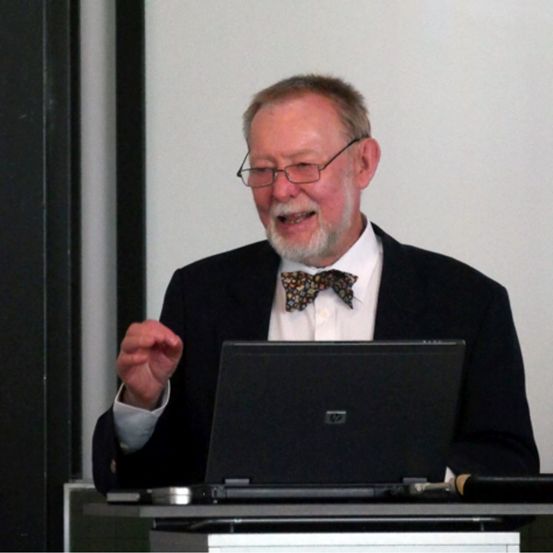
Obituary for Dietrich Barsch by Olaf Bubenzer, Bernhard Eitel and Wilfried Haeberli

Dietrich Barsch died on 23 May 2018, shortly before his 82nd birthday.  Born in Erfurt, Germany, Dietrich Barsch established the basis for his scientific career with studies in Geography, Mathematics, Philosophy and Geology at the Universities of Kiel and Bonn, Germany. After having obtained his PhD in 1962 at the University of Bonn, he moved to the University of Basel, Switzerland, where he achieved his habilitation in 1968.  Following intermittent research stays in Baton Rouge and Tempe (USA) he became professor at the University of Kiel in 1972 and in 1974 resumed the chair of Geography at the University of Heidelberg, Germany until his retirement from active service on 30 October 1998 for sudden health problems.

Dietrich Barsch was a highly dynamic scientist with extraordinary charisma. He had a remarkable ability to shape his scientific surrounding and to inspire his scholars. His greatest passion was devoted to cold mountains  (Alps, Andes, Scandinavia) and the Antarctic. A milestone in the history of high-mountain geomorphology was the introduction and application of precise field measurements such as drilling, geophysics or photogrammetry as part of his advanced studies on cohesive creep and viscous flow of ice-rich permafrost, the so-called rock glaciers. He thereby became one of the promoters of modern geomorphological research considering – based on focused field experiments – material properties, physical/chemical conditions, processes, space and time as elements to understand complex land-forming processes. His early work in this domain indeed triggered a spectacular and continued expansion and progress in permafrost and rock glacier research among the younger generations. He also initiated the Priority Programme of the German Research Foundation (DFG) on Geomorphological Mapping in the Federal Republic of Germany (1976-1984) and contributed essentially to the DFG-Priority Programme on Fluvial Geomorphodynamics in the Younger Quaternary. In parallel to such work, Dietrich Barsch and his research team carried out numerous application-oriented studies, for instance about decentralised flood protection and various hydrological questions in the wider surroundings of Heidelberg. This spectrum made him one of nationally as well as internationally most widely recognized representative not only of Geomorphology but also of Geoecology. A reflection of this is the title of his seminal book “Rock-glaciers. Indicators for the Present and Former Geoecology in High Mountain Environments”.

At national as well as international level, Dietrich Barsch was an excellent networker. He assumed the functions of the chair of the German Working Group for Geomorphology (1986-1990), chair of the German Society of Geography (1989-1991) and chair of the International Association of Geomorphologists (1993-1997). He also served the University of Heidelberg as Dean of the Faculty of Geosciences and as chair of the University Governing Board. He was repeatedly honoured for his performances. In 2005 the Ferdinand-von-Richthofen Medal was awarded to him in view of his outstanding merits for research in geomorphology. This put him in a row with famous scientists of the 20th century like Sven Hedin or Erich von Drygalsky. Beyond his unexpected health-induced end of active research and teaching he kept an uninterrupted interest in the development of physical geography.  The memory of his innovative and stimulating personality will accompany us.

Olaf Bubenzer and Bernhard Eitel, Heidelberg; Wilfried Haeberli, Zürich

Obituary for Dietrich Barsch by Roland Mäusbacher and Lothar Schrott

Prof. Dr. Dietrich Barsch passed away on the 23rd of May 2018, shortly before his 83rd birthday. He was an internationally renowned Geomorphologist but also a dedicated representative in the field of Geography. Between 1989 and 1993 he was the chairman of the Central Association of Geography (Zentralverband der Geographie) and the Association of University Teachers of Geography (Verband der Hochschullehrer der Geographie). During this time of reunification of both German states, the realignment of the former German Democratic Republic institutions and their inclusion to the Association was close to his heart, especially as he originated in Erfurt. Many conversations with the colleagues in the Geography departments, the university management and ministries have helped to preserve the existing departments and even to re-establish them. At the same time, he became vice president of the International Association of Geomorphologists (IAG) and the organization’s president for the following four years. During his presidency, he succeeded, along with Denys Brunsden and Olav Slaymaker, to integrate the IAG into the International Council of Scientific Unions in order to raise the international awareness of Geomorphology.
His scientific career started in Bonn, where he received his doctorate from Carl Troll in 1962. He then moved to Basel, where he habilitated in 1968 with his geomorphologic work on the central Bernese Jura. Since then, periglacial research, in particular the comprehensive analysis of rock glaciers and mountain permafrost, has been one of his main research fields.

In 1972, he was offered a professorship in Kiel but changed two years later to a full professorship in Heidelberg. From 1976-1982, he directed the priority program of the DFG “Geomorphological Mapping of the Federal Republic of Germany” whose aim was to create geomorphological maps in the scales 1:25,000 and 1:100,000 of typical landscapes of the Federal Republic of Germany. A total of 45 sample sheets have been published. Apart from implementing of the legend, Dietrich Barsch was also committed to the application-oriented and computer-aided evaluation.

Other important aims in his scientific career were focusing mainly on Arctic regions and non-European high mountain ranges. He led a total of five expeditions, two of them to the Arctic (Ellesmere Island in 1978, Spitsbergen in 1990) and three to Antarctica (Kind George Island), as well as repeated visits to the Andes, Himalayas and Rocky Mountains. Together with Nel Caine he published a pioneering paper in 1984 regarding the systemic understanding of High Mountain Geomorphology. As a member of the Scientific Committee of Antarctic Research (SCAR), he contributed greatly to geographic polar research.

Since the end-1980s, fluvial geomorphodynamics represented a further focus. His main research area was the Elsenz-catchment near Heidelberg, where various questions regarding hydrology (interflow), sediment budget and paleo-ecology have been investigated within the framework of different DFG projects. Also the Svalbard Project SPE90 focused on questions of current fluvial dynamic. In 1996, his highly respected book “Rockglaciers” was published.

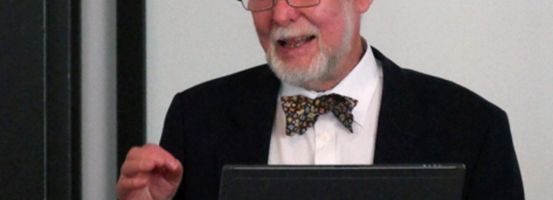
Apart from his research, Dietrich Barsch dedicated himself intensively to the academic teaching and self-administration. Therefore, he was multiple times acting director of the Department of Geography and twice faculty director of Geosciences at the University of Heidelberg. The numerous diploma and doctoral theses, which evolved under his supervision, reveal that the promotion of young scientists has always been very important to him. Dietrich Barsch knew, as only few university teachers do, how to arouse the interest of students in scientific challenges. His authentic passion for the discipline and his charisma captivated countless students. He quickly recognized the abilities of his students and encouraged them with the right mix of motivation and trust. Depending on the potential of his students, he was able to develop customized suggestions and solutions. Even in difficult situations, such as on excursions or under adverse conditions during research stays, he not only kept the overview and calm but also exuded by his positive attitude and optimism a confidence which provided cohesion and harmony. Dietrich Barsch has given his students great freedom – “you cannot carry the dog to hunt” was a frequently-used saying from his repertoire. Inextricably linked with Dietrich Barsch was also his trademark at the university – he always wore a bow tie with a white shirt, a professor of the old school. Many of his former graduate students have remained true to academia and have become renowned professors themselves. They have further developed his scientific foci and preferences, which were particularly located in the periglacial and fluvial geomorphology.

Due to an illness, Dietrich Barsch was suddenly torn from his job shortly before his 60th birthday. His colleagues and many students are still grateful for the time of his active work. Dietrich Barsch will remain in our memory as a highly esteemed university teacher and scientist.

For his contributions to Geomorphology, he received the Richthofen Medal of the German Working Group for Geomorphology (Deutscher Arbeitskreis für Geomorphologie) in 2005.


Roland Mäusbacher (Jena) and Lothar Schrott (Bonn)
 

Grants awarded to Young Geomorphologists for Geocuar 2018

The International Association of Geomorphologists offered 2 grants of 500 euros to favour the participation of Young Geomorphologists (under 35 years old) from Latin America but not mainly based in Argentina in the 7º Congreso Argentino de Cuaternario y Geomorfología, “Geocuar 2018” organized by Argentine Association of Geomorphology and Quaternary Studies (AACG) being held in Puerto Madryn, Chubut, Argentina, 18-21 September 2018.

For further information on the Congress, please visit:

http://cacg2018.cenpat-conicet.gov.ar/inicio

The selection of candidates has been carried out by a Commission appointed by the IAG and the Geocuar Executive Committees.

3 eligible applications were received and IAG grants have been awarded to the following candidates:

– Gabriel GÓMEZ SZMULEWICZ (Chile)
– Igor PESSOA (Brazil)

First Circular for the IAG Regional Conference in Athens 19-21 Sept 2019

We are pleased to announce that the first circular for the IAG’s regional conference in Athens is now available here. Please visit the dedicated website for more information: https://rcg2019.com/

Important dates to note:

31/10/2018: Call for abstracts opens
30/04/2019: Abstract Submission will be closed
15/05/2019: Early Bird Registration will be closed
31/07/2019: Regular Registration will be closed on

15-18/09/2019: Pre-Conference Field Trip, Mykonos & Delos Islands
15-18/09/2019: Pre-Conference Field Trip, Santorini Island
19-21/09/2019: IAG’s Regional Conference, Athens
22-25/09/2019: Post-Conference Field Trip, Rhodes Island, in the memory of Paolo Pirazzoli
22-27/09/2019: 2nd IAG-EGU Intensive Course: Field Training School

Call for IAG Grants – 1st Workshop of the IAG Working Group DENUCHANGE

1st Workshop of the IAG Working Group DENUCHANGE: Denudation and Environmental Changes in Different Morphoclimatic Zones

Storkowo-Szczecinek (Poland), September 25-27, 2018

The International Association of Geomorphologists offers 4 grants of 150 euros to favour the participation of Young Geomorphologists (under 35 years old) from Europe (but not mainly based in Poland) in the 1st Workshop organized by the IAG Working Group DENUCHANGE, to be held in Storkowo-Szczecinek (Poland) on September 25-27, 2018.

The Workshop aims at the better understanding of possible effects of ongoing and accelerated environmental changes on present-day denudational processes and familiarization with systematic and quantitative studies (environmental monitoring) on the actual drivers of denudational processes in differentiated landscape controls.

The organization of the event includes initiatives specifically dedicated to Young Geormophologists and in particular calculation of chemical and mechanical denudation rates as well as carrying out GIS-hydrological modelling using the SWAT model.

For further information on the Workshop, please contact Dr. Joanna Gudowicz (Gudowicz@amu.edu.pl)

Applicants (with a special interest in geomorphological topics to be proved by their CV) are requested to submit the following files before 25 August 2018:

– Application form (doc) (pdf);

– Short CV (maximum 2 pages long), including up to 10 papers;

– Copy of valid passport / identity card;

– Abstract submitted (or to be submitted) to the Workshop.

The above mentioned documents should be submitted to the IAG grant office at iaggrantoffice@gmail.com (please specify IAG Grant – DENUCHANGE 2018 in the subject of the accompanying e-mail).

30th National Conference of the Indian Institute of Geomorphologists 3-5th October, 2018

Coming soon the 30th National Conference of the Indian Institute of Geomorphologists (IGI) being held in New Delhi 03-05 October, 2018. The focal theme is “Geomorphology, Environment and Society” and the event is organized by Department of Geography, Faculty of Natural Sciences, Jamia Millia Islamia. Participants are requested to send their abstracts by 15th August, 2018 and after acceptance, full papers for publication in the conference proceedings need to be received by 20th September, 2018.

For more details and link to abstract submission, see here.

Report from the 19th Edition of the Joint Geomorphological Meeting

The IAG granted its auspices for the 19th Edition of the Joint Geomorphological Meeting (Italy, Romania, France, Belgium, Greece), took place in Buzău, Romania May 16-20 entitled “From field mapping and landform analysis to multi-risk assessment:challenges, uncertainties and transdisciplinarity”. Organized by the Institute of Geography (Romanian Academy) and the Faculty of Geography (Univ. of Bucharest) under the auspices of the International Association of Geomorphologists (IAG) and the Geomorphologists Associations from Romania, Italy, France, Belgium and Greece, the Conference gathered together two scientific events with a long history – the 19th Joint Geomorphological Meeting Italy-Romania-France-Belgium-Greece andthe 34th Romanian National Symposium on Geomorphology, dedicated to 50 years of activity of Pătârlagele Natural Hazards Research Center.The Conference attracted 80 participants from 8 countries (Italy, France, Belgium, Greece, Japan, Canada, Poland and Romania), for two days of keynote lectures, oral and poster presentations alternating with two field trips in the Vrancea seismic region (the Curvature sector of the SE Carpathians). The conference aimed to encourage participation from all geomorphology fields, as well as inter- and transdisciplinary research, to provide a high-level but also a comfortable and friendly framework, to promote active discussions and challenging scientific debates. The topic of the conference was outlined by 7 keynote lectures:

  • Emil Sever Georgescu: Seismic landscape of Romania: challenges of a specific paradigm;
  • Monique Fort: Earthquakes impact on geomorphology (landforms and processes) in the Himalayas at different time scales;
  • Takashi Oguchi: Digital elevation models and their applications in geomorphology: historical review and future perspectives;
  • Alessandro Chelli: The activities of AIGeo Working Groups towards a new applied geomorphic map;
  • Olivier Dewitte: Landslide hazard assessment in an urban-sprawling context. A geomorphological approach in Bukavu, DR Congo;
  • Florin Pendea: Transdisciplinary approaches to advancing knowledge of glacio-isostatic rebound in Northern Canada;
  • Konstantinos Vouvalidis: Hydromorphological assessment of suburban torrents for flood protection: the flood event of West Attica, Greece).

In addition, 23 oral plenary presentations brought into discussions issues like tectonic jointing/control on large landslides occurrence/evolution, seismic landslides, the use of dendrochronology in the study of shallow and deep-seated slides or debris flows, glaciated karst, permafrost distribution modelling, improved landslide scarp detection, geoarchaeology and anthropogenic geomorphology, flood risk and reservoir siltation, anthropogenic subsidence,paleogeographic transformations, medium-term morphodynamics, natural variability and human influence in the evolution of deltas, variability in sediment budgets at river mouths, zoogeomorphic impact of animals in alpine environments or the use of multi-temporal satellite interferometry in landslide detection and monitoring, found their position in the multi-hazard paradigm. During a 3-hours long session, including 2-minute madness presentations, 25 posters with the following topics were intensely debated: fluvial multi-temporal evolution and risks (from fluvial terrace formation and channel forming and discharge to financial losses); snow avalanche susceptibility mapping; paleo-reconstruction of floodplains; coastal evolution patterns and nearshore sandbars positioning; mountain climate variability and its influence on permafrost and frost weathering; geomorphological assessments of major landslides and their role in relief evolution; neuro-fuzzy systems and neural network technology for drainage sub-basins classification and slope erosion by runoff analysis; changing Alpine glacier forelands; hillslope – river channel coupling, etc.

Two field trips were organized on Friday 18th May and Sunday 20th May, which provided a detailed image of the multi-hazard hotspot of Buzău Carpathians and Subcarpathians, on the conceptual framework of single-to-multi-hazard assessment and on the inter- and transdisciplinarity characteristics of geomorphology within a multi-risk approach. A multi-hazard hotspot of Europe, Vrancea seismic region is offering the perfect framework for observing, discussing and evaluating a multi-risk environment, where forms and processes, alongside prediction, modelling and validation of single and multi hazards are fitting perfectly within an extremely complex yet challenging system of approaches. The field trips were focused on high magnitude-low frequency landslides (deep seated, mainly dormant, with large reactivation potential) and their climatic and seismic triggers. Aspects concerning deepfocal seismicity, litho-structural conditioning, active and blind faults were also discussed. The human impact on the environment was emphasized through case-studies like road and reservoir construction. Morphodynamic mapping, landslide susceptibility and hazard scenarios,numerical and statistical models were detailed through field examples.

Following the active discussions held during both lectures and field trips, we are positive
that the conference opened new research ideas and collaboration initiatives. The 20th edition of the Joint Geomorphological Meeting will take place in Greece, organized by the Hellenic Committee for Geomorphology and Environment.

Call for IAG Grants for the VII Argentinian Meeting on Quaternary and Geomorphology

The International Association of Geomorphologists offers 2 grants of 500 euros to favour the participation of Young Geomorphologists (under 35 years old) from Latin America but not mainly based in Argentina in the 7º Congreso Argentino de Cuaternario y Geomorfología, “Geocuar 2018” organized by Argentine Association of Geomorphology and Quaternary Studies (AACG) to be held in Puerto Madryn, Chubut, Argentina, 18-21 September 2018.

The Congress aims at gathering participants from Argentina and from different parts of the world to discuss and share the most recent advances in the broad field of Geomorphology and Quaternary Sciences. The three day-long event offers a plenary session and two mega-poster sessions, one mid-day field trip and three short courses. In addition, a post-meeting field trip will be organized in the Peninsula Valdés region, a World Heritage Site.

The organization of the event includes initiatives specifically dedicated to Young Geormophologists and in particular three short courses are available to attend: Biomineralization and environmental studies, Malacology in Quaternary marine environments, Radiocarbon analysis: methods and solutions to solve geological problems.

For further information on the Congress, please visit:

http://cacg2018.cenpat-conicet.gov.ar/inicio

Applicants (with a special interest in geomorphological topics to be shown by their CV) are requested to submit the following files before 30 June 2018:

– Application form (PDF and doc);

– Short CV (maximum 2 pages long), including up to 10 papers;

– Abstract submitted (or to be submitted) to the Congress

The above mentioned documents should be submitted to the IAG grant office at iaggrantoffice@gmail.com (please specify IAG Grant – Geocuar 2018) in the subject of the email).

The selection of candidates will be carried out by a Commission appointed by the IAG Executive Committee. For further information on the IAG Grants, feel free to contact the IAG Training Officer.


Marta Della Seta

IAG Training Officer

marta.dellaseta@uniroma1.it

1st Workshop of the IAG/AIG Working Group DENUCHANGE: Denudation and Environmental Changes in Different Morphoclimatic Zones

We’re pleased to announce the first Workshop of the IAG/AIG Working Group DENUCHANGE: Denudation and Environmental Changes in Different Morphoclimatic Zones to be held in Storkowo-Szczecinek (Poland), September 25-27, 2018 and will include fieldtrips. Please find more information here and please register you interest by 31 May using the form here.

Inaugural meeting of IGU-IAG Joint Commission/Working Group on Anthropocene Geomorphology

Reminder of the Inaugural meeting of IGU-IAG Joint Commission/Working Group on: Anthropocene Geomorphology: Geo-archaeology, Geomorphology and Society

Date: 7-8 April 2018 (before EGU)

Venue: Vienna University, Department of Geography, Universitätsstrasse 7, 1010 Vienna

Purpose:

  1. to kick off the activities of the new commission;
  2. to address the importance to society
  3. to plan activities for the next four years

If you are interested to join the meeting and/or the IGU-IAG joint commission/working group, contact Prof. Jiun-Chuan Lin (jclin@ntu.edu.tw) and Margreth Keiler (margreth.keiler@giub.unibe.ch). We will accept 30-40 participants to join the meeting.

Program of the meeting:

Workshop on Saturday April 7th 2018


9:00-9:15 Welcome and Introduction to the meeting
9:15- 10:30 Block 1: 5 min input of each participant (max. 1 slide) to following questions (we will take notes)

·       What are your main research topics in the context of geomorphology and society?

·       Why are you interested to contribute to the joint IGU/IAG commission on …?

10:30-11:00 coffee break
11:00-12:15 Block 2:  5 min input of each participant
12:15-12:30 Summary of expertise and interests to contribute to IGU/IAG commission – Short discussion
12:30-13:30 Lunch break
13:30-14:40 World Café Discussion:

·       Introduction and aims to/of world café discussion (10 min)

·       Which are the main topics we would like to have addressed and focused on in the joint commission à aims (15 min)

·       How can we cooperate within the joint commission to reach the different aims (15 min)

·       What should be the output of the joint commission after four years? How can we disseminate the results (15 min)

·       Preparation of poster answering the three questions (15 min)

14:40 -15:00 Short coffee break
15:00-15:45 5-7 min presentation of the results by different groups
15:45-16:30 Overall discussion and summary of different results
16:30-17:00 Discussion next steps
19:00- ·       Conference dinner


Field trip on Sunday April 8th 2018

  • Topics are general introduction to geological and geomorphological setting, human-nature interactions (agriculture, settlement development), floods, fluvial terraces and valley development.During the field trip we will first use public transport to the foothills of the Vienna forest (overview of Vienna and beyond), walk downhill towards the city to the Danube River, and take public transport to further stops.


Remarks:

  1. Participants should register for this meeting and prepare their presentation in one ppt slide (5 minutes talk max.)
  2. Registration is free. However participants need to arrange their own accommodation and lunch during workshop.
  3. There is a dinner on 7 April, please book with the registration form if you are available to join.

Delivering expert reports for the International Court of Justice

Expert geomorphological opinion was submitted to the International Court of Justice by Prof. Eric Fouache (former IAG President) and Prof. Francisco Gutiérrez (current IAG Vice-President) on the case “Maritime delimitation in the Caribbean Sea and the Pacific Ocean (Costa Rica v. Nicaragua)” on 30th April 2017. The Court delivered its Judgment on the case on 2 February 2018.

Delegations from Nicaragua and Costa Rica, personnel of the Registry of the International Court of Justice, Eric Fouache (further right) and Francisco Gutiérrez (bottom right). Image taken in the second mission carried out in March 2017.

The report is accessible at: http://www.icj-cij.org/files/case-related/157/157-20170430-WRI-01-00-EN.pdf

A description of the case is here: http://www.icj-cij.org/en/case/157

8th International Conference on UNESCO Global Geoparks September 8 th -14 th, 2018 – Adamello Brenta Geopark, Trentino

IAG are pleased to announce the 8th International Conference on UNESCO Global Geoparks to be held September 8 th -14 th, 2018 at Adamello Brenta Geopark, Trentino.

The programme includes talks, posters and fieldtrips. The abstract deadline is 15th April 2018 and more information can be found here: https://www.campigliodolomiti.it/ggn2018

Reports from the 9th International Conference on Geomorphology in New Delhi now available

The 9th International Conference on Geomorphology (9th ICG) was held from 6 to 11 November 2017 at Vigyan Bhawan, New Delhi. The ICG is the official conference of the International Association of Geomorphologists (IAG) and is held once in every four years.

A report on the overall conference is available here.

A report on the post-conference IAG-EGU Intensive Course for Young Geomorphologists
‘Geomorphology Field Training in tectonically active mountain regions’ held 12-16 November 2017 can be found here.

A report on the post conference fieldtrip to Nepal run by Prof. Monique Fort (Paris Diderot University), with the support of Dr. Basanta Raj Adhikari (Tribhuvan University, Nepal) and Prof. Narendra Raj Khanal (Tribhuvan University, Nepal) can be found here.

19th Joint Geomorphological Meeting (Italy-Romania-France-Belgium-Greece) & 34th Romanian National Symposium on Geomorphology

On May 16-20, 2018, the Romanian Association of Geomorphologists, the Institute of Geography of the Romanian Academy and  Bucharest University, Faculty of Geography are organizing the 19th Joint Geomorphological Meeting (Italy-Romania-France-Belgium-Greece) together with the 34th Romanian National Symposium on Geomorphology.
More details at this link: http://sng.geomorfologie.ro/

Central European Conference on Geomorphology and Quaternary Sciences: Connecting disciplines

Central European Conference on Geomorphology and Quarternary Sciences

23. – 27. September 2018, Giessen / Germany
The conference is organized by the German Association on Geomorphology and the German Quaternary Association and will be hosted by the Department of Geography, Justus-Liebig-University Giessen near Frankfurt / Germany. The conference is thought bringing together the closely related disciplines of Quaternary Sciences and Geomorphology, both dealing with the earth surface, its processes and related sediments.
The conference will present cutting edge research from both disciplines with their specific and individual perspectives. Oral presentations and poster sessions will be accompanied by a number of keynote lectures. Pre- and post-conference field trips and a public evening lecture will complement the scientific program.

The conference is open to all scientists interested in Geomorphology and Quaternary Sciences and especially young scientists are invited to participate!We are very much looking forward to welcome you in Giessen,

Markus Fuchs,
on behalf of the organizing committee
1 2 3 4