Obituary for Professor Andrew Goudie (1945-2026) – Former President of the International Association of Geomorphologists
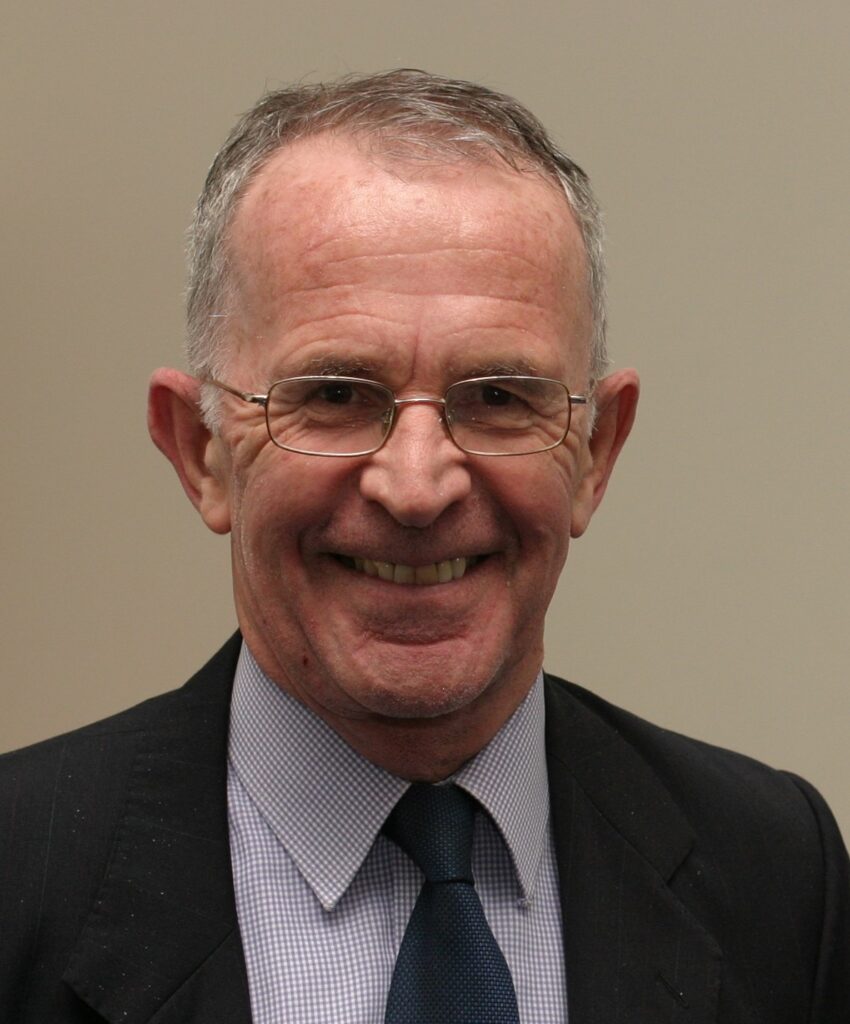
On 8 October 2026, the international geomorphological community lost one of its most distinguished scholars, Professor Andrew Goudie, former President of the International Association of Geomorphologists (IAG) from 2005 to 2009 and Professor Emeritus of Geography at the University of Oxford.

Professor Goudie was an internationally renowned geographer and geomorphologist whose remarkable career made lasting contributions to the understanding of arid environments, landscape evolution, and environmental change. Beyond his outstanding scientific achievements, he will be remembered for his intellectual curiosity, generosity, mentorship, and unwavering commitment to advancing geomorphology worldwide.

Born on 21 August 1945 in Cheltenham, England, Andrew Goudie devoted much of his academic career to the University of Oxford. He held numerous distinguished positions, including Professor of Geography at Hertford College, Head of the School of Geography and the Environment, Pro-Vice-Chancellor, and Master of St Cross College. He subsequently served as Director of the Oxford China Centre.

His scientific interests were extensive, with particular expertise in desert geomorphology and arid environments. His research encompassed dune systems, desert depressions, mega-yardangs, dust storms, and landscape dynamics over Quaternary timescales. He was also a pioneer in investigating human impacts on the environment. A prolific author, he published approximately 40 books and more than 200 scientific articles, influencing generations of geographers and geomorphologists across the world.

His remarkable scientific contributions received widespread recognition, including the Founders’ Gold Medal of the Royal Geographical Society (1991), an honorary Doctor of Science degree from the University of Oxford (2002), and the Farouk El-Baz Prize for Desert Research (2007). In addition to his presidency of the IAG, he held leadership positions in numerous scientific organisations, including the Geographical Association, the British Geomorphological Research Group, and the British Institute in Eastern Africa. He was named an Honorary Fellow of the IAG during the 8th International Conference on Geomorphology in Paris in 2013.

Professor Goudie’s influence extended far beyond his publications and institutional achievements. His colleagues and fellow IAG Presidents remember him as an exceptional scientist, an inspiring mentor, and a generous friend.

Olav Slaymaker, IAG President from 1997 to 2001, first met Andrew in 1974 during an international geomorphological field excursion in Israel and the Sinai Desert. He recalled Andrew’s remarkable intellectual potential and enthusiasm, describing his special ability to recognise emerging directions in geomorphological research and contribute authoritative books and reviews. He particularly remembered Andrew’s integrity, generosity, and excellence.

Michael Crozier, IAG President from 2009 to 2013, remembered Andrew’s clarity of thought, breadth of knowledge, extraordinary work ethic, and distinctive sense of humour. He also highlighted Andrew’s highly productive presidency of the IAG, during which the Association expanded its activities internationally, including regional conferences in Kota Kinabalu, Malaysia, and Brașov, Romania. Reflecting on his passing, Crozier invoked a New Zealand Māori expression, “kua hinga he totara nui”, meaning that a great tree of the forest has fallen.

Eric Fouache, IAG President from 2013 to 2017, recalled Andrew as a demanding yet deeply compassionate scientist who cared greatly about his students and colleagues. He particularly remembered Andrew’s enthusiastic support for the French Geomorphology Group’s successful proposal to host the 8th International Conference on Geomorphology in Paris in 2013.

Mauro Soldati, IAG President from 2017 to 2022, described Andrew’s scientific publications as milestones in geomorphology. He also expressed gratitude for Andrew’s encouragement and trust in appointing him as Training Officer within the IAG Executive Committee, remembering his ability to approach challenging matters with kindness and effectiveness.

Sunil Kumar De, IAG President from 2022 to 2026, recalled the encouragement and guidance he received from Andrew throughout his academic career. Their first meeting at the 5th International Conference of Geomorphology in 2001 left a lasting impression. Andrew subsequently encouraged his involvement in the IAG and provided opportunities for leadership within its Working Groups. His advice on the importance of academic excellence and sustained international engagement remained an enduring source of inspiration.

Mihai Micu, IAG President from 2026 to 2030, remembered meeting Andrew for the first time during the 2008 Regional Conference on Geomorphology in Brașov, Romania. A memorable journey through the Carpathian Mountains provided an opportunity to discover not only an outstanding scientist but also a true gentleman.

These personal reflections demonstrate the profound influence Professor Goudie had on the international geomorphological community. His legacy is reflected not only in his pioneering research, extensive publications, and leadership of scientific institutions, but also in the generations of researchers whom he encouraged, supported, and inspired.

The International Association of Geomorphologists mourns the loss of an extraordinary scholar, dedicated leader, mentor, and friend. His contributions to geomorphology and his commitment to fostering international scientific collaboration will continue to inspire future generations.

The IAG extends its deepest condolences to his wife, Professor Heather Viles, his daughters, grandchildren, family, friends, and colleagues worldwide.

With tributes from Olav Slaymaker, Michael Crozier, Eric Fouache, Mauro Soldati, Sunil Kumar De, and Mihai Micu, former and current Presidents of the International Association of Geomorphologists.

Please find the entire text here.
CALL for IAG GRANTS for BSG Post-Graduate Training Workshop Windsor, UK, 7–10 December 2026

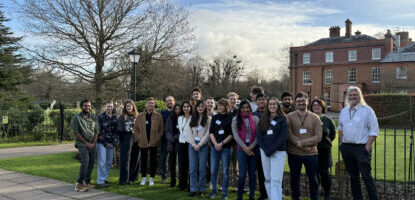
The International Association of Geomorphologists (IAG) offers 3 grants of 300 € (three hundred Euros) to PhD students in Geomorphology from Europe (except K) who are willing to take part in the BSG Post-Graduate Training Workshop (Windsor, UK, 7–10 December 2026). The Windsor Workshop is dedicated only to PhD students who started in 2026. The Workshop is organised by the British Society for Geomorphology (BSG) and recognised by the IAG.

The course will provide PhD students with elements of training for research and with an opportunity to meet others at an early stage of their training when they are facing the problems of research design, etc. The content is non-technical, but provides training in project management, group work, dealing with large data sets, fieldwork, lab and numerical modelling, gaining funding as well as publication and future career development. Students will also meet a wide variety of academics and facilitators who are practicing researchers as well as the BSG postgrad representatives of the Executive.

The workshop has been running at the Cumberland Lodge in Windsor Great Park for over 30 years – many notable researchers and academics attended and benefited from this course.

For further information on the Windsor Workshop, please visit: https://www.geomorphology.org.uk/windsor-workshop/

Applications from candidates who already achieved one or more IAG grants totalling 500 euros or more in the past 3 years will not be eligible.

Candidates for IAG GRANTS are requested to submit the following files up to Monday 19 October 2026:

  • Application form (see below)
  • 1-page CV
  • Proof of being a PhD student
  • Title and brief summary of the PhD research project.

Files should be submitted to:
Efthimios Karymbalis, IAG Vice-President; Ciro Cerrone, IAG Training Officer
E-mail: iaggrants@gmail.com (E-mail subject: ” BSG Windsor 2026″)

The selection of candidates will be carried out by a Commission appointed by the IAG Executive Committee. For further information on the IAG Grants feel free to contact the IAG Training Officers.

LINK TO APPLICATION FORM

Report by IAG Grant Holder for the Geomorphosites 2026 – Heritage Geomorphology Conference (Sion, Switzerland, 7-12 September 2026)

The International Conference “Geomorphosites 2026 – Heritage Geomorphology” and the Intensive Course on Geomorphosites for MSc and PhD students were held in Sion, Switzerland, from 7–12 September 2026. The event celebrated 25 years of research on geomorphological heritage and paid tribute to the late Prof. Mario Panizza.

The International Association of Geomorphologists (IAG) supported the participation of Young Geomorphologist Naomi Irapta, a PhD candidate at the Department of Physical Geography, Eötvös Loránd University, Hungary. The IAG Travel Grant enabled her to participate in the intensive course, present her research during the conference and engage with leading researchers working in heritage geomorphology.

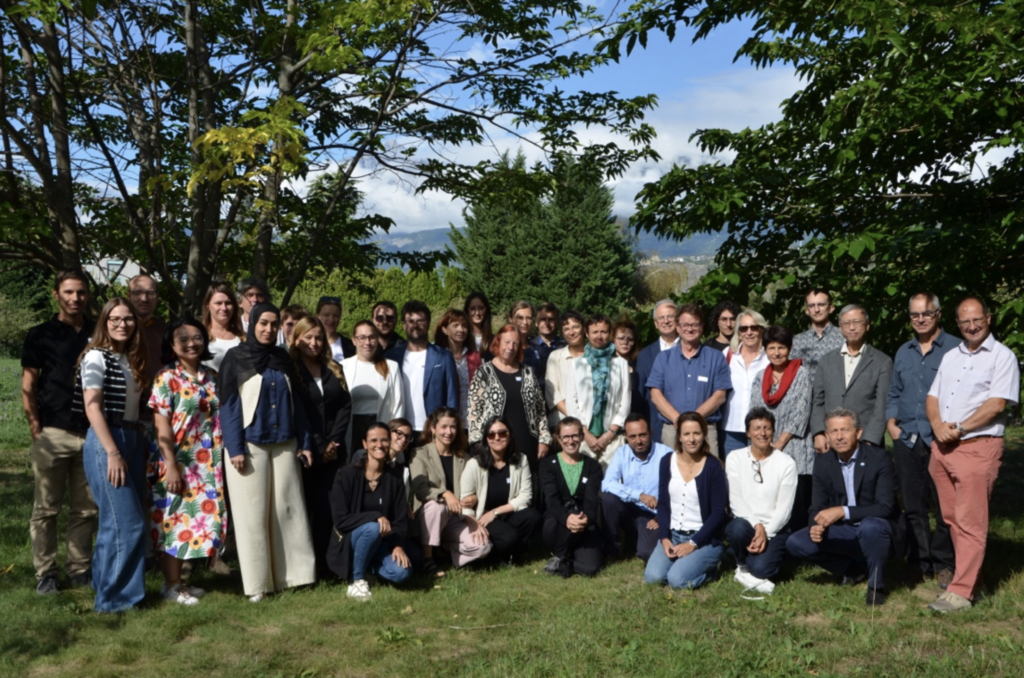
Group photo after the 2-day conference Geomorphosites 2026 – Heritage Geomorphology

Naomi considered the intensive course particularly valuable for her PhD research on volcanic geodiversity. Sessions addressing new conceptual and methodological frameworks in Heritage Geomorphology, geosite degradation risk and mapping, and geosystem services and disservices were directly relevant to her ongoing work. The course also included demonstrations of LiDAR and Virtual Reality technologies and a field trip to the Chablais UNESCO Global Geopark.

During the international conference, Naomi presented her research entitled “Geomorphosite-based mapping of geodiversity for volcanic regions to facilitate geointerpretation and geosite evaluation.” Discussions and feedback from other participants provided new ideas for extending her work and reflecting on the role of volcanic geodiversity within the broader field of Heritage Geomorphology.

With additional support from her university, she also joined post-conference excursions to Mont Fort and the Aletsch Glacier. These experiences provided further perspectives on geoeducation, changing glacial landscapes and the challenges involved in protecting geoheritage.

Naomi described the week as an enriching experience that strengthened her motivation to continue her work in geoheritage and highlighted the value of being part of an international community dedicated to protecting the Earth’s geomorphological heritage.

See Naomi’s full report here: Naomi Irapta

Report by IAG Grant Holder – IX Argentine Congress on Quaternary and Geomorphology (Diamante, Argentina, 25-28 August 2026)

The IX Argentine Congress on Quaternary and Geomorphology was held in Diamante, Entre Ríos Province, Argentina, from 25–28 August 2026.

The International Association of Geomorphologists (IAG) supported the participation of Christian Fernando Colman Patiño, a geologist from the Geology Department of the Facultad de Ciencias Exactas y Naturales, Universidad Nacional de Asunción, Paraguay. Christian described the congress as a valuable opportunity for academic exchange and professional development within the regional geomorphological community.

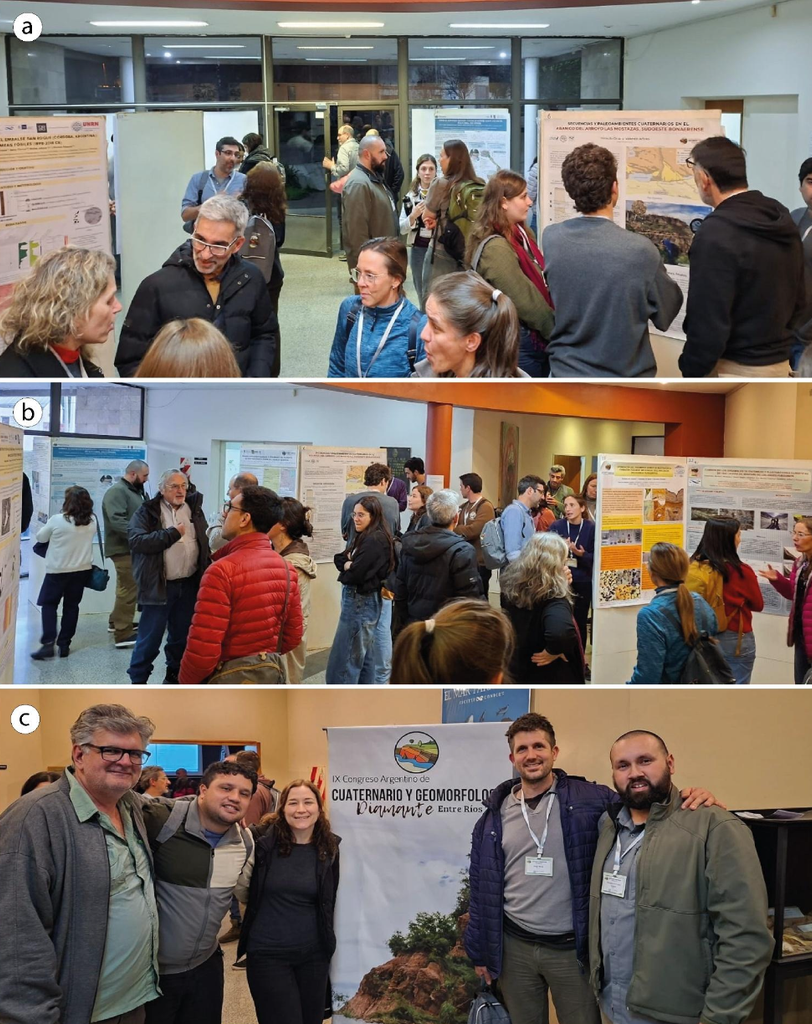
With the support of the IAG grant, Christian presented the poster “Geomorphological Indicators of Deep Chemical Weathering in Chinle Formation Sandstones, Petrified Forest National Park, Arizona, USA.” The poster session enabled him to share his results with geomorphologists from across the region and receive positive feedback and constructive suggestions for future research.

Participation in the congress also introduced him to updated methodologies and innovative approaches being applied in Quaternary and geomorphological research. The meeting provided opportunities to exchange experiences with researchers working across different areas and to strengthen his understanding of current tools and techniques in the field.

Christian highlighted the importance of the meeting for strengthening existing collaborations with research groups and institutions outside Paraguay while also establishing new professional connections with potential for future institutional cooperation. His participation additionally helped increase the visibility of his ongoing research and provided an opportunity to reconnect with researchers from Argentina and Brazil.

See Christian’s full report here: Christian Fernando Colman Patiño

Photographs taken during the poster sessions. a, b) Poster sessions. c) An opportunity to reconnect with researchers from Argentina and Brazil.