IAG Glossary Of Geomorphology – by Prof. Andrew Goudie
Thanks to the work of Prof. Andrew Goudie, the IAG GLOSSARY OF GEOMORPHOLOGY is now available for the international geomorphological community!
IAG – International Association of Geomorphologists
Geomorphology is the Interdisciplinary and Systematic Study of Landforms, their Landscapes and the Earth Surface Processes that create and change them
Thanks to the work of Prof. Andrew Goudie, the IAG GLOSSARY OF GEOMORPHOLOGY is now available for the international geomorphological community!
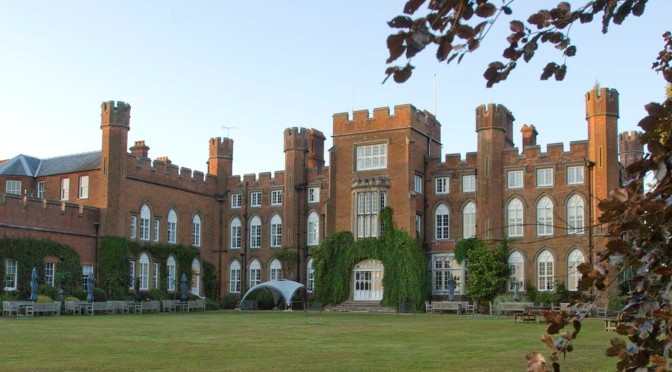
The International Association of Geomorphologists (IAG) offered 2 grants of 300 (three-hundred) Euros to PhD STUDENTS in GEOMORHOLOGY from EUROPE (except UK) who were willing to take part in the BSG Post-Graduate Training Workshop (Windsor, UK, 9-12 December 2013). PhD students at an early stage of their PhD programme have been encouraged to apply. The Workshop was organised by the British Society for Geomorphology (BSG) and recognised by the International Association of Geomorphologists (IAG). The course provided PhD students with elements of training for research and with an opportunity to meet others at an early stage of their training when they were wrestling with the problems of research design etc. There have been sessions about starting research, designing research projects, methodological issues, modelling, fieldwork problems and remedies, presentations techniques, time management, and workshops for project organisation and discussion of individual projects.
For further information on the Workshop, please visit the BSG website at: http://www.geomorphology.org.uk/postgraduates/windsor
IAG-GRANT HOLDERS
The selection of candidates has been carried out by a Commission appointed by the IAG Executive Committee.
Mauro Soldati
IAG Vice-President and Training Officer
A remarkable number of applications for IAG grants for the Paris Conference was received. Out of 97 applications received, 70 were eligible for grant awarding. The process of grant acceptance has been completed and the final list of the IAG grant holders is reported. The Selection Committee appointed by the IAG Executive Committee assessed the applications and finally 20 Young Geomorphologists under 35 years old have been supported. They came from 12 countries with a Purchasing Power Parity below 16,000 international dollars. Reports by the grant holders are linked aside.
Among the IAG grant holders, the Jean Tricart Scholar has been nominated in occasion of the 1st General Assembly and a prize has been offered by the French Group of Geomorphology (GFG). This prize has been offered in recognition of the outstanding research carried out by the French geomorphologist Jean Tricart (1920-2003) in Latin America, Africa and Asia.
The designated Jean Tricart Awarded is Danang Sri HADMOKO, from Gadjah Mada University, Bulaksumur, Yogyakarta, Indonesia.
GRANT HOLDERS:
Mauro Soldati
IAG/AIG Training Officer
The 8th International Conference on Geomorphology of the International Association of Geomorphologists (IAG) took place in Paris at the Cité des Sciences de La Villette from August 27 to 31, 2013. The main topic of this 8th Conference was “Geomorphology and Sustainability“. Organized by the Groupe Français de Géomorphologie (GFG) and open to all scientists and practitioners, this Conference included 26 scientific sessions, 5 key-note lectures and one Workshop devoted to Young Geomorphologists.
YOUNG GEOMORPHOLOGISTS SESSION
Convenors: Etienne COSSART, Johnny DOUVINET & Stuart LANE
This session welcomed young scientists (PhD students, post-doctorates) who were interested in discussing new approaches and methods in geomorphology (spatial analysis, mathematical modelling, conceptual and quantitative approaches and links between them). Presentations could focus on any component of the discipline and related earth sciences (hydrology, Quaternary geology, soil sciences, etc.), and be either fundamental or applied. Preliminary results and discussions of fieldwork and methodological strategies (observation, data acquisition before modelling) were appropriate, as well as methodological developments, such as geomorphic mapping through GIS. Equally, numerical simulation approaches such as those linked to complexity theory (agent-based modelling, Cellular Automata) or physically-based methods for specific process representations have been welcomed. The participants of this session have been invited to participate to the intensive course for young geomorphologists held at the end of the conference (from September 1st to 3rd).
The 8th International Conference on Geomorphology of the International Association of Geomorphologists (IAG/AIG) took place in Paris at the Cité des Sciences de La Villettefrom August 27 to 31, 2013. The main topic of this 8th Conference was “Geomorphology and Sustainability”. Organized by the Groupe Français de Géomorphologie (GFG) and open to all scientists and practitioners, this Conference included 26 scientific sessions, 5 key-note lectures and one Workshop devoted to Young Geomorphologists. Fourteen field trips in various parts of France and neighbouring countries have been attended by the participants.
20 Young Geomorphologists have been supported with grants offered by IAG.
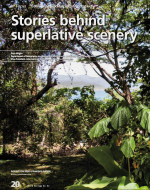
Geomorphology is part of Earth Sciences and is best described as the scientific study of landforms, their assemblages, and the processes that moulded them in the past and that continue to change them today. Geomorphologists study the shapes of landforms and the regularities of their spatial distribution; they decipher their origin and evolution, and try to establish their ages. Geomorphology has also been dubbed the ‘science of scenery’. Thus, the scenery – the combination of landforms and water – has become a subject of scientific inquiry.
Geomorphology is also about the interpretation of natural landscapes and, in the context of World Heritage properties, it helps us to understand what brought about their uniqueness and their rarity.
Read the whole paper published by World Heritage Review magazine published jointly by UNESCO and Publishing for Development (printed four times a year in English, French and Spanish). The publication presents and promotes the preservation of our World Heritage, with detailed feature articles and news items about the most outstanding cultural and natural sites in the world.
Geomorphological Mapping: a professional handbook of techniques and applications is a new book targeted at academics and practitioners who use, or wish to utilise, geomorphological mapping within their work. Synthesising for the first time an historical perspective to geomorphological mapping, field based and digital tools and techniques for mapping and an extensive array of case studies from academics and professionals active in the area. Those active in geomorphology, engineering geology, reinsurance, Environmental Impact Assessors, and allied areas, will find the text of immense value.
The Training School was organized by the European Centre on Geomorphological Hazards (CERG, Strasbourg, France) – which is one of the centres of the EUR-OPA Agreement of the Council of Europe – in close collaboration with the Euro-Mediterranean Centre on Insular Coastal Dynamics (ICoD, Valletta, Malta) and the European Centre on Coastal Risks (CerCo, Biarritz, France). The aim of the course was to provide the participants with updated knowledge on traditional and innovative multi-disciplinary methods and techniques for the analysis of geomorphological coastal instability processes and related hazards and risks.
The International Association of Geomorphologists (IAG) offered 1 grant of 300 (three hundred) Euros each to a YOUNG GEOMORPHOLOGIST (under 35 yrs old) from EUROPE.
Reportby the IAG grant holder: Mara Nunes
The International Association of Geomorphologists (IAG) offered up to 7 grants to YOUNG GEOMORPHOLOGISTS (under 35 yrs old) from AFRICA who were willing to take part in the Regional Conference on Geomorphology to be held in Addis Ababa (Ethiopia) from 18-22 February 2011.
The IAG has allocated 5000 euros to this initiative.
Mauro Soldati
IAG Training Officer
The IAG Regional Conference on Geomorphology for Human Adaptation to Changing Tropical Environments held in Addis Ababa, Ethiopia, 18-22 February 2011. The Conference promoted exchange of studies and methods for the investigation of tropical geomorphology in connection with different effects of global environmental changes.
International Cooperation – Talk 1 | International Cooperation – Talk 2 | Field Guide for MER | Field Guide for NEH | Field Guide for AFAR | Final Report on the IAG RCG-2011 | Conference program | Abstract Volume of the IAG RCG-2011 | Report on the IAG Intensive Course
Recommendation: please remember to mention the source when you utilize the material contained in the Guidebooks.
The Workshop was organised by the British Society for Geomorphology (incorporating the former BGRG) and recognised by the International Association of Geomorphologists (IAG). There will be sessions about starting research, designing research projects, methodological issues, modelling, fieldwork problems and remedies, presentations techniques, time management, and workshops for project organisation and discussion of individual projects
The Workshop is organised by the British Society for Geomorphology (incorporating the former BGRG) and recognised by the International Association of Geomorphologists (IAG). IAG offered 3 grants of 350 (three-hundred-fifty) Euros to PhD STUDENTS in GEOMORHOLOGY from EUROPE (except UK) who were willing to take part in the BSG Post-Graduate Research Training Workshop (Windsor, UK, 13-16 December 2010).
Mauro Soldati
IAG Training Officer
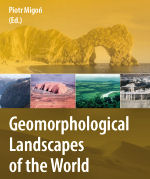
Physical landscapes are one of the most fascinating facets of our Planet, which tell stories about the evolution of the surface of the Earth. This book provides an up-to-date information about the geomorphology of the selected ‘classic’ sites from around the world and shows the variety of geomorphological landscapes as moulded by different sets of processes acting over different timescales, from millions of years to days. The volume is written by nearly fifty geomorphologists from more than twenty countries who for many years have researched some of the unique sceneries on the planet. The thirty six chapters present each continent of the world. They describe landscapes of different origin, so that the reader can learn about the complexity of processes behind the sceneries.
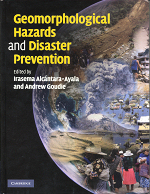
Human activities, especially in the last two centuries, have had a huge impact on the environment and landscape through industrialisation and land-use change, leading to climate change, deforestation, desertification, land degradation, and air and water pollution. These impacts are strongly linked to the occurrence of geomorphological hazards, such as floods, landslides, snow avalanches, soil erosion, and others. This book, with chapters written by an international team of geomorphologists provides state-of-the-art knowledge about the contribution of geomorphology to the comprehension of hazards, links the work undertaken by geomorphologists to the framework of the likely impacts of climatic change and global environmental change, shows the significance of technology (remote sensing and Geographical Information Systems) for hazard and risk assessment and management, and demonstrates the role of geomorphology in vulnerability and risk analysis, disaster prevention and sustainability.
The 7th International Conference on Geomorphology was held in Melbourne Australia on July 7-12, 2009.
IAG Regional Conference on Geomorphology Landslides, Floods and Global Environmental Change in Mountain Regions was held in Brasov, Romania, 15-25 September 2008 . The Conference promoted exchange of studies and methods for the investigation of landslides, floods and associated geomorphic processes in connection with different effects of global environmental changes. Over 150 people from 30 countries attended and Professor Dan Balteanu and his Romanian colleagues are to be congratulated on providing a very full and successful programme of lectures, workshops, field trips and social activities.
The IAG offered 3 grants for YOUNG GEOMORPHOLOGISTS world-wide (except Romania). The IAG Selection Committee have been awarded to the following:
IAG Regional Conference on Geodiversity of polar landforms was held in Longyearbyen, Spitsbergen, Norway, August 1-5, 2007
International Polar Year 2007/08 is a good reason to get interested in the polar regions of the Earth, to undertake research in glacial, periglacial and paraglacial areas important from a scientific, a methodological and a utilitarian point of view.
The IAG offered 2 grants for YOUNG GEOMORPHOLOGISTS for non-EU East Euorpean countries. The IAG Selection Committee have been awarded to the following:
Conference Publication – Landform Analysis
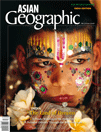
Geomorphology can be regarded as the ‘Science of Scenery’. It seeks to explain how landscapes develop over time, the operation of earth surface processes such as erosion, landsliding and river flows, and the interactions between these processes and the landscape … The link between scientific research and environmental policy, however, is far from automatic. One of the key themes of the conference [Regional Conference on Geomorphology in Kota Kinabalu, 2007 – ed.] was ‘Communicating Geomorphology’, which explored how field scientists can integrate their research with a wider body of knowledge about the environment, discuss ideas with stakeholders and explain the significance of their research findings to a wider audience.
Read the whole paper published by ASIANGEOgraphic
IAG Regional Conference on Environmental Change in the Tropics was held in Kota Kinabalu, Malaysia, June 25-29, 2007
Tropical Asia Pacific is of critical importance to global environmental change. The region is undergoing rapid development, land cover transformation and urbanisation. Against this backdrop of rapid transformation, geomorphology can make contributions in many different ways.
The first two days of the colloquium speakers of different countries will present (in English and French) interdisciplinary case studies from a wide time-frame. The geographical context is not limited but focus will be on the Mediterranean area. Simultaneously an important poster session will be organised. On the optional third day, a geo-archaeological excursion in Flanders is programmed.
IAG Regional Conference on Tropical and Subtropical Geomorphology: processes, methods and techniques was held in Goiania, Brazil, September 6-10, 2006.
Main objective of the conference is the discussion on geomorphological studies and techniques related to humid and wet-dry tropical and subtropical environments.
The 6th International Conference on Geomorphology was held at Zaragoza University, Zaragoza, Spain, September 7-11, 2005. Organised by Sociedad Española de Geomorfologia.